Wolfram argues for pairing language models with precise computation
Why symbolic computation and curated knowledge can act as a dependable mathematical layer for LLM applications.
Visual references
3 images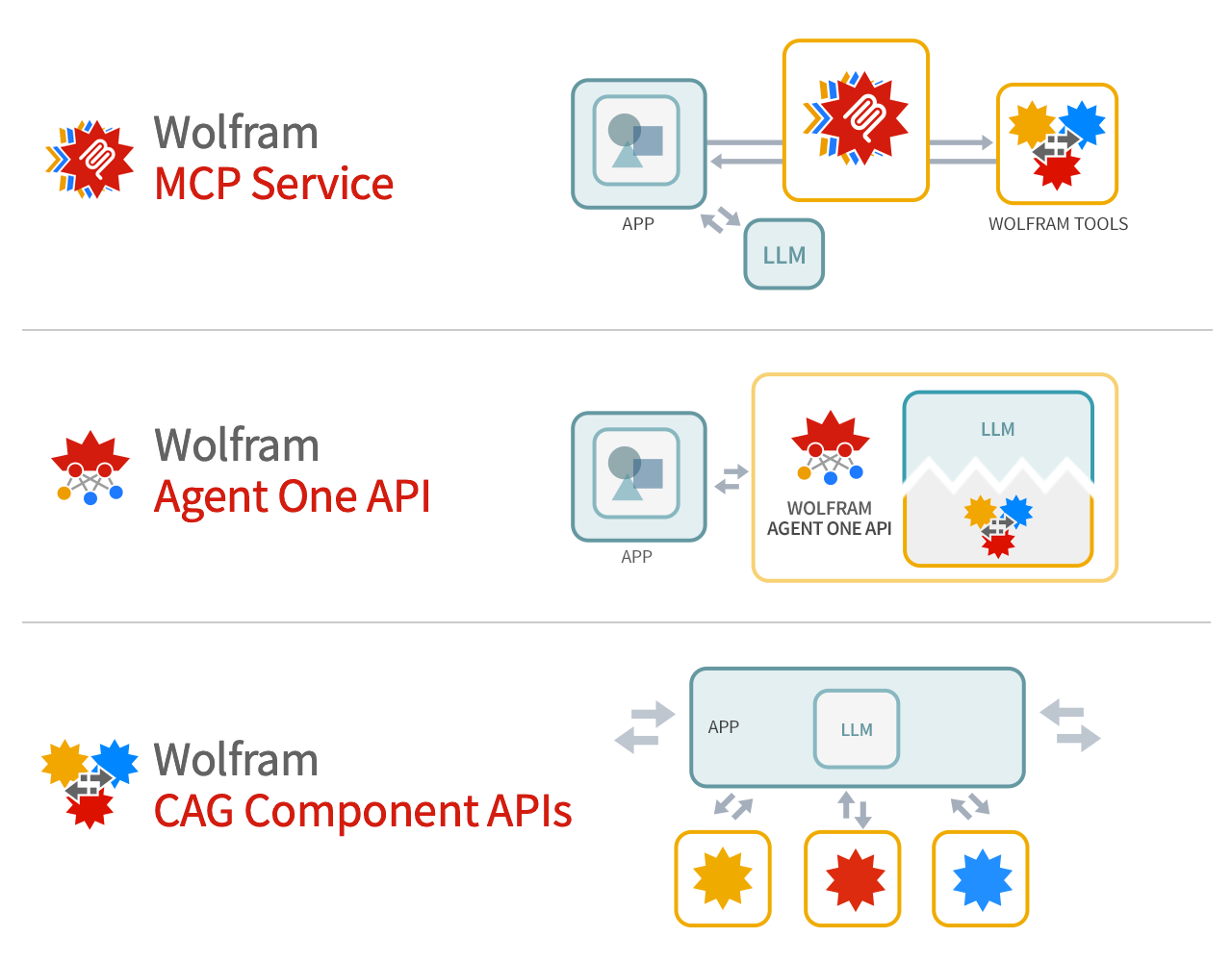
Give the language model a calculator it can respect
Wolfram's proposal is straightforward: use a language model for interpreting a question and communicating an answer, but route exact computation and factual data through a system designed for those jobs. In mathematics, that separation matters because fluent text can be correct in tone while wrong in arithmetic, units, or conditions.
A practical architecture
A reliable application can translate a student's request into a formal query, send it to a symbolic or numerical engine, and then ask the model to explain the verified result at the learner's level. The engine handles algebra, calculus, units, graphs, and data; the model handles dialogue, scaffolding, and clarification.
The limitation
Connecting tools does not remove the need for testing. Query translation can still be wrong, and an explanation can misrepresent what the engine computed. Good systems display the original query, the assumptions, and a reproducible calculation.