9GAG
 9GAG
9GAG
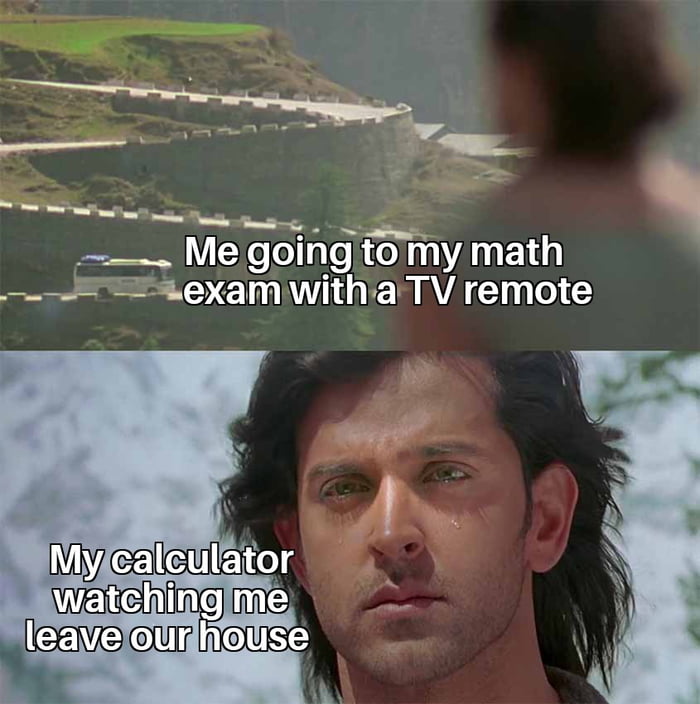
When you arrive at the maths exam with the wrong kind of remote control.
Your calculator is already preparing a dramatic goodbye.
School life Family safe
More than 100 original, light-hearted math jokes made for sharing with family and students.
Clean jokes for families and classrooms — because laughter is a lovely way to start a conversation about maths.
9GAG
When you arrive at the maths exam with the wrong kind of remote control.
Your calculator is already preparing a dramatic goodbye.
 9GAG
9GAG
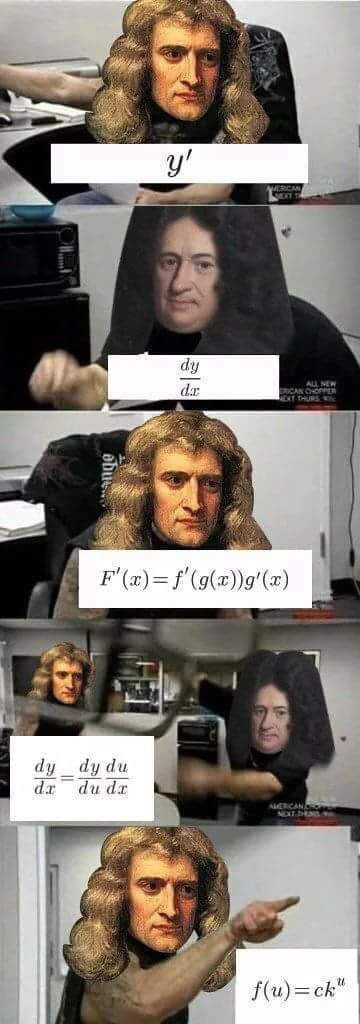
When one derivative quietly becomes a whole chain of derivatives.
The chain rule has entered the chat.
 9GAG
9GAG
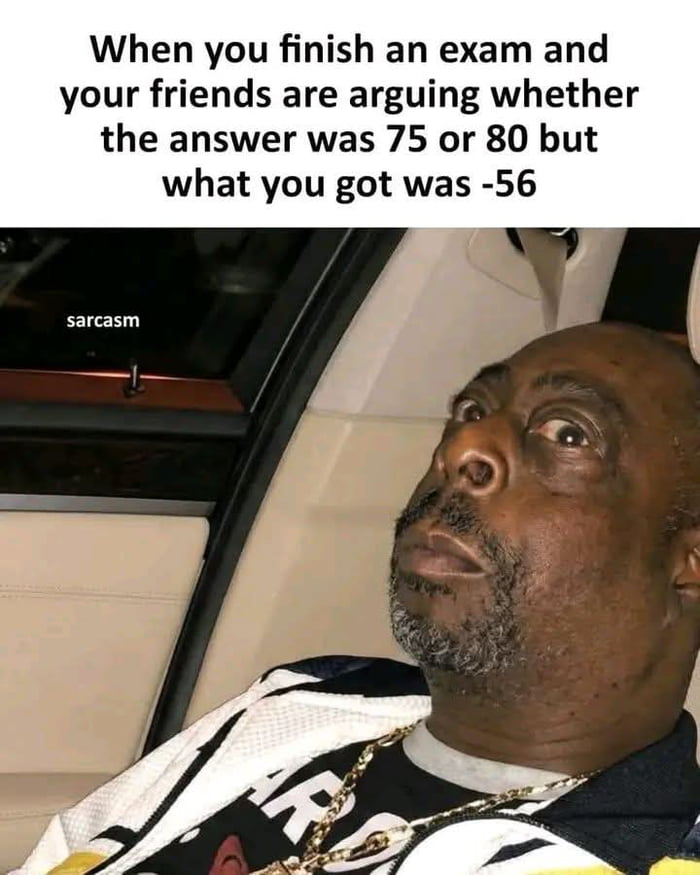
When the whole class is debating two answers and yours is not even on the list.
Confidence is a statistic, but checking is still a good idea.
 9GAG
9GAG
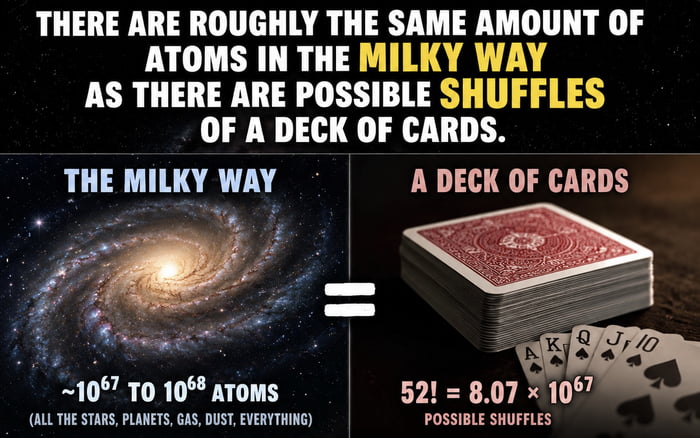
When a deck of cards meets the night sky and the numbers get enormous.
Probability has a way of making ordinary things feel cosmic.
 9GAG
9GAG
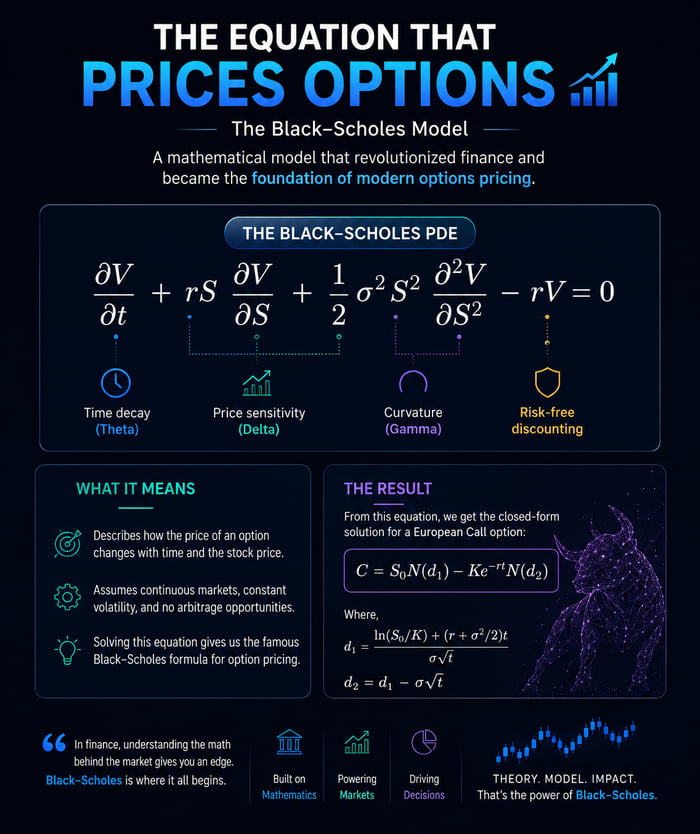
When a financial model arrives with a full infographic and absolutely no small talk.
The Black–Scholes equation brought the whole syllabus.
 9GAG
9GAG
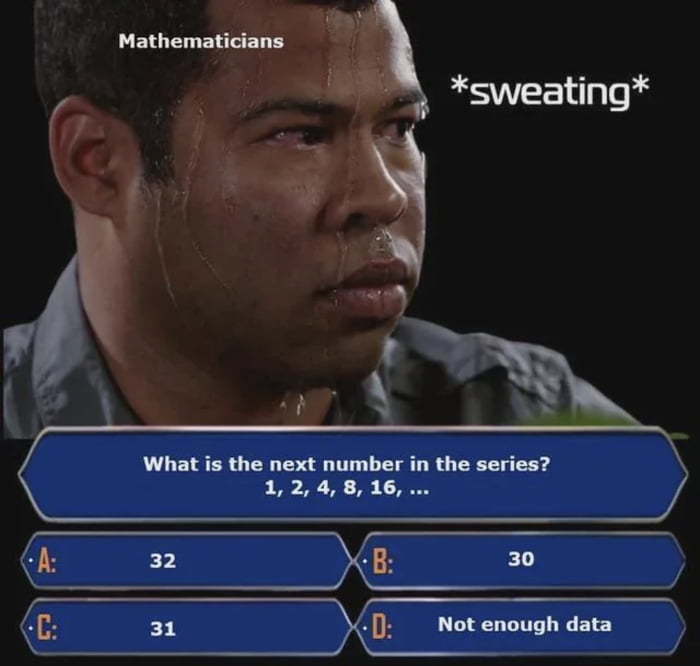
When the pattern question looks easy until the answer choices start negotiating.
The sequence had one job: keep everyone guessing.
 9GAG
9GAG
When a word problem has candy bars and suddenly everyone becomes an expert.
At last, a maths question with delicious data.
 9GAG
9GAG
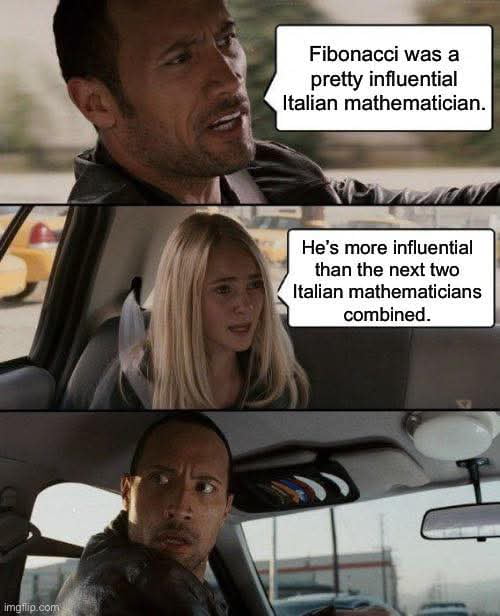
When someone explains Fibonacci with a perfectly serious face.
The next two numbers suddenly feel very influential.
 9GAG
9GAG
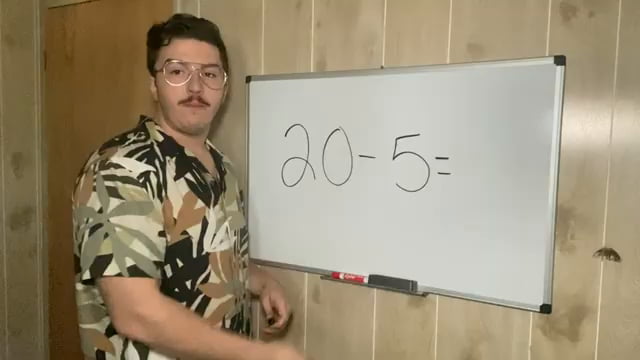
When the whiteboard says 20 − 5 and the room waits for a grand announcement.
Simple arithmetic still deserves a dramatic entrance.
 9GAG
9GAG
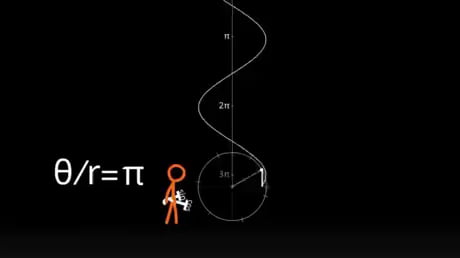
When a circle, a line, and a patient student meet at the board.
Geometry is just shapes finding their angle.
 9GAG
9GAG
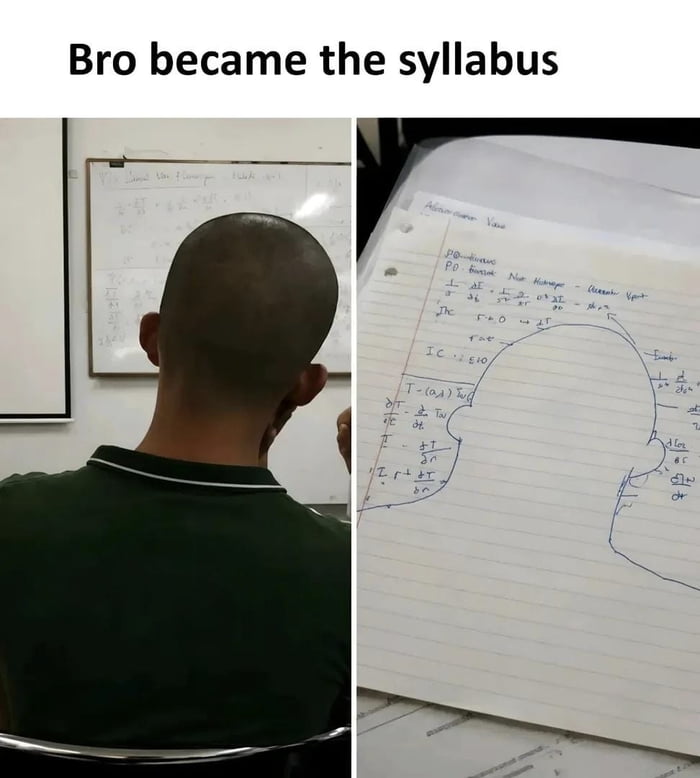
When your notes become so detailed they start looking like a portrait.
The syllabus was not copied — it was carefully graphed.
 9GAG
9GAG
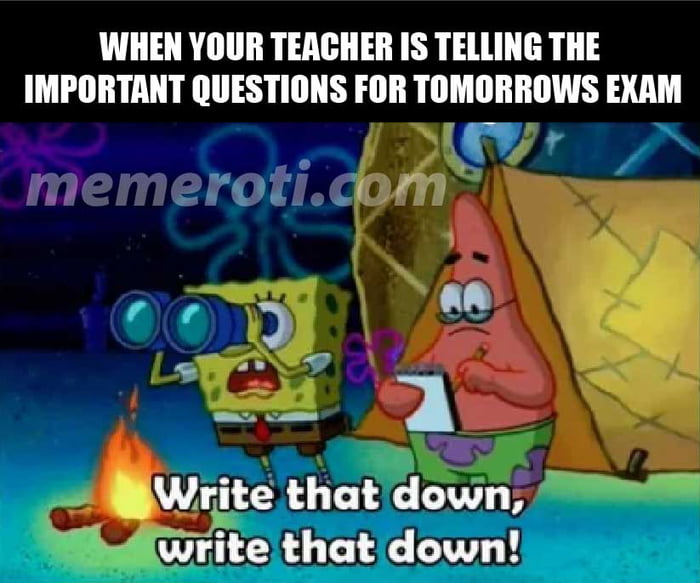
When the teacher reveals the important questions for tomorrow’s test.
Every student suddenly discovers the power of note-taking.
I told my teacher I had a problem with fractions.
She said it was probably just a small part of a bigger issue.
My homework and I have a healthy relationship.
I give it space, and it gives me a zero.
The pencil was nervous before the maths test.
It had too many points to make.
Why did the student bring a ladder to class?
The maths lesson was on another level.
I asked for extra credit.
The teacher said I already had enough problems.
My calculator and I are taking a break.
It needs time to process our relationship.
The ruler joined the class discussion.
It wanted to measure its words.
The notebook got promoted.
It had excellent lines of reasoning.
I finished the worksheet early.
Then I checked the back and found the real final boss.
My teacher said I should be positive.
So I added a plus sign to my answer.
The whiteboard looked confident before class.
It knew the teacher was about to fill in the details.
I sharpened three pencils for maths.
The exam still found a way to get to the point first.
Addition is the friendliest operation.
It is always happy to bring people together.
Subtraction is very quiet.
It keeps taking things away from the conversation.
Multiplication loves parties.
It always brings extra guests.
Division is a fair friend.
It makes sure everyone gets an equal share.
Zero applied for every job.
It said it could fill any position.
Seven was feeling lucky.
It had a great number of reasons.
The number 6 had a great day.
It finally found someone who completed it: 4.
I tried to argue with 10.
But it had too many digits to discuss.
The numbers went to the gym.
They wanted to work on their sum-mer bodies.
What did 0 say to 8?
Nice belt!
A fraction walked into a café.
It asked for a piece of the pie.
I trust proper fractions.
They always know their place.
The denominator stayed calm.
It knew how to keep things under control.
The numerator felt confident.
It was always on top of things.
Two halves had an argument.
They needed to see the whole picture.
I met a mixed number at lunch.
It had a whole lot going on.
Why did the fraction bring a map?
It was looking for its common ground.
A fraction told a joke.
It was only partly funny.
The pie was good at maths.
It was excellent at dividing itself fairly.
Fractions do not like drama.
They prefer things in equal parts.
I asked x how it felt.
It said it was still trying to find itself.
The variable went on a holiday.
Nobody knew where it was.
Why was the equation so popular?
It had a lot of solutions.
The equal sign is a great mediator.
It always sees both sides.
The x and y became friends.
They met at the coordinate plane.
Algebra makes me emotional.
Sometimes I feel like I am solving for myself.
The equation packed lightly.
It only brought one unknown.
The coefficient was a team player.
It always multiplied the effort.
I lost my variable.
Luckily, I knew how to isolate the problem.
What did x say after solving the equation?
I knew I had it in me.
The circle was late.
It took the long way around.
The triangle was confident.
It had three good points.
The angle got invited everywhere.
It was always right around the corner.
The square felt comfortable.
Everything about it was right.
The parallelogram was relaxed.
It had the right attitude and the right sides.
The line was a good listener.
It never interrupted the point.
I asked the polygon to tell a story.
It had many sides to it.
The radius was popular.
It knew everyone from the centre outward.
Why did the cube stay home?
It needed some space.
The geometry book looked tired.
It had too many angles to consider.
The compass entered the art room politely.
It did not want to draw attention to itself all at once.
The rectangle loved group projects.
It was great at keeping everyone aligned.
I asked a die for advice.
It said, “Take a chance.”
The coin was indecisive.
It kept seeing both sides.
Probability joined the guessing game.
It had a fair chance.
The statistician brought an umbrella.
There was a high chance of rain.
An impossible event walked into a room.
It did not happen.
A certain event arrived early.
It was bound to happen.
The sample space felt crowded.
There were outcomes everywhere.
The fair coin was a good friend.
It never picked favourites.
The probability teacher told one joke.
The odds were it would be funny.
The chance of a bad pun was high.
It was almost certain to happen.
The mean had a busy weekend.
It was in the middle of everything.
The median stayed calm.
It knew how to find the middle ground.
The mode was famous.
It appeared more than anyone else.
The range went on a trip.
It wanted to see how far it could go.
The bar chart went to a café.
It ordered a tall one.
The pie chart brought dessert.
It already knew how to divide it.
The outlier felt different.
But that was exactly its point.
The data told a story.
The chart gave it a great plot.
The average was modest.
It never tried to be the most.
A graph walked into a party.
It was there to connect the dots.
The derivative was always in a hurry.
It cared about the rate of change.
The integral brought a blanket.
It wanted to cover the whole area.
The limit was shy.
It got close but never crossed the line.
The curve went to the gym.
It wanted to improve its slope.
The tangent had one good point.
It always knew where to touch.
The maximum felt on top of the world.
The minimum understood low points too.
Calculus can be uplifting.
It is all about raising the rate.
The function changed its mind.
It had a different value at every point.
The area under the curve got comfortable.
It finally found its place.
The calculus book needed a break.
It had reached its limit.
I asked AI to solve my equation.
It said, “Please show your working.”
The chatbot met a proof.
It said, “That argument has strong points.”
The matrix started a band.
It already had great rows.
The algorithm went jogging.
It wanted to optimise its steps.
The dataset told a joke.
The model needed more training to get it.
The neural network loved geometry.
It had many connected points.
The prompt asked for a proof.
The model replied, “I will show my work.”
The calculator became an AI assistant.
It finally learned to explain itself.
The model got a maths question wrong.
Even smart tools need a good fact-check.
Human and AI solved a puzzle together.
The best answer had both kinds of thinking.
The proof assistant asked the chatbot to slow down.
Precision wanted a turn in the conversation.
The AI tutor loved algebra homework.
Every unknown was a chance to ask a better question.
I have a joke about infinity.
It does not have an ending.
I am friends with every number.
We have common factors.
I wanted to tell a prime joke.
But it would only work for a select few.
The decimal point felt small.
But it still made a big difference.
The number line took a walk.
It wanted to move in the right direction.
A negative number entered the room.
It was in a bad mood, but had a positive friend.
The comma was important.
It knew exactly where to pause.
The equal sign got a medal.
It was outstanding on both sides.
The plus sign smiled.
It always added something positive.
The number line was confident.
It knew where it stood.
My family had a maths game night.
Everyone wanted to be the favourite number.
Dad said he was good at mental maths.
Then he forgot where he put his calculator.
Mum baked a circular cake.
Every slice had a central angle.
The family budget went to school.
It learned how to make cents of everything.
Our dog loves geometry.
It is always chasing the perimeter.
The baby counted to ten.
Then demanded a bigger number.
We played hide and seek with x.
It was impossible to find the unknown.
The family car used a calculator.
It wanted to work out the mileage.
Our cat prefers prime numbers.
It does not like sharing its factors.
We put a pie on the dinner table.
The maths conversation came naturally.
The shopping list loved percentages.
It always knew when a discount was worth it.
The clock studied angles.
It had a hand in every lesson.
The elevator was good at sequences.
It knew exactly which floor came next.
The recipe became a mathematician.
It measured every ingredient carefully.
The bus timetable loved coordinates.
It always knew where to meet.
The gardener used geometry.
Every flower bed had a beautiful shape.
The baker trusted ratios.
That is how the dough rose to the occasion.
The weather app learned probability.
It never promised a sunny answer.
The suitcase loved optimisation.
It packed the most clothes into the least space.
The map had a scale problem.
It needed to put things in perspective.
The traffic light understood variables.
Its answer changed with the situation.
The pizza delivery used shortest paths.
It knew the fastest route to every slice.
The bookshelf was well organised.
Every book had its own category.
The phone battery understood rates.
It tracked how quickly its energy changed.
The tailor measured twice.
It wanted a perfectly fitted solution.
The gardener found the maximum.
That plant grew tallest in the best sunlight.
The family budget used a spreadsheet.
Every cell had a useful role to play.
The photographer loved symmetry.
Every picture had two sides to the story.
The chef used negative numbers.
Some temperatures had to go below zero.
The travel plan needed an algorithm.
It turned many choices into one clear route.
The grocery receipt loved statistics.
It always had a mean total by the end of the trip.
The laundry basket studied sorting rules.
It was determined to classify every sock correctly.